Wax & gold: tradition and innovation in Ethiopian culture by Levine Donald Nathan 1931-
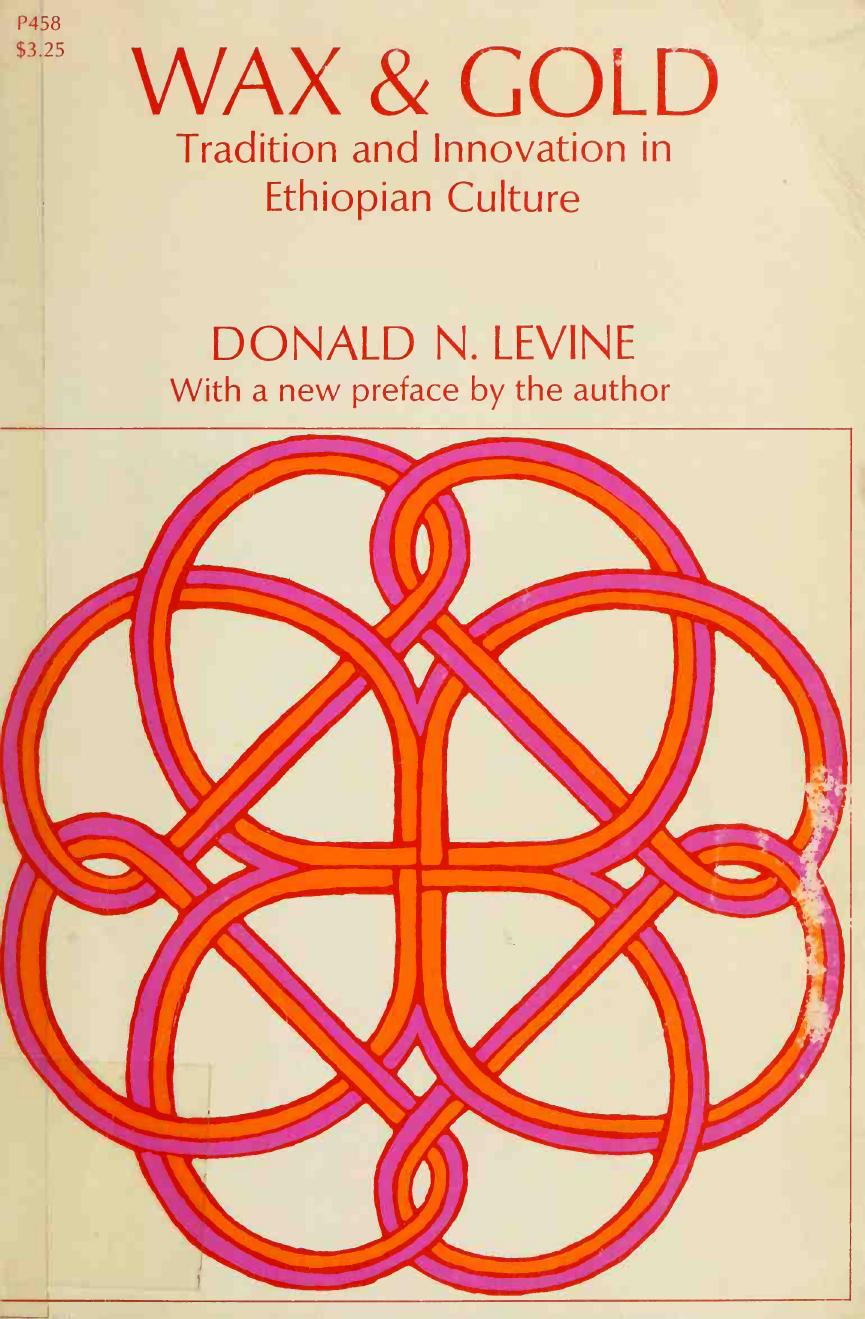
Author:Levine, Donald Nathan, 1931-
Language: eng
Format: epub, pdf
Tags: Amhara (African people), Culturele antropologie
Publisher: Chicago, University of Chicago Press
Published: 1972-08-05T16:00:00+00:00
century, who instituted a number of monthly hoHdays and prescribed new liturgical texts; to Menelik, who introduced vaccination and the eucalyptus tree in the twentieth century. For more than a century now kings and emperors have attempted to combat the traditional Abyssinian repugnance for manual labor by themselves engaging in arduous physical work on numerous occasions.^^ Haile Selassie has followed a pattern with abundant precedents in introducing the many changes which have characterized his reign.^^
As object of Abyssinia's highest esteem, symbol of its most cherished values, possessor of supreme wealth and power, and author of new norms, the emperor of Ethiopia thus qualifies as an elite in the more technical, sociological sense of the word as well as in its original sense of "being chosen."^^ Indeed, if more extreme interpretations of the emperor's significance are to be credited, he might even be viewed as the fountainhead of high status for all other elites. Thus Bruce, in a famous passage, declares:
The Kings of Abyssinia are above all laws. They are supreme in all causes, ecclesiastical and civil; the land and persons of all their subjects are equally their property and every inhabitant of the kingdom is born their slave; // he bears a higher ran\ it is by the \ing's gift; for his nearest relations are accounted nothing better. [Italics mine.]^*
Such an interpretation, however, is more ideological than analytic. Throughout Ethiopian history one can discern definite limits to royal authority, and bases of elite status other than imperial favor.
It is true, as Margery Perham ably sets forth, that a primitive state of technology and severe geographical obstacles prevented the realization of imperial power to the degree that the royal ideology would have permitted.^^ Yet this failure of the monarchy "to build up any kind of administrative framework through which to exercise the absolute powers with which, by tradition and consent, it was endowed" was not simply a matter of wanting techniques. It also reflected the importance of ultimate values other than that of anointed royalty in Abyssinian culture.
The primary sociological limit to imperial authority was the commitment of the Abyssinian people to the tradition of their church. Religious conversion was one change which, at least in the period of Amhara hegemony, could no longer be tolerated. Za Dengel (1603-^) and Susneyos (1607-32) were brought down because of their forthright conversion to Catholicism, and the overthrow of Lijj lyasu in 1917 was legitimated on the alleged grounds that he had become a practicing Muslim. The decline in power of Tewodros II (1855-68) was due in no small measure to the fact that his cavalier policy toward the clergy resulted in his being branded an enemy of the church.
A second limit on imperial authority lay in the perennial tendency of certain regional families to become endowed with an aura of legitimacy in their
Download
Wax & gold: tradition and innovation in Ethiopian culture by Levine Donald Nathan 1931-.pdf
This site does not store any files on its server. We only index and link to content provided by other sites. Please contact the content providers to delete copyright contents if any and email us, we'll remove relevant links or contents immediately.
Crystal Cove by Lisa Kleypas(39190)
Spell It Out by David Crystal(36158)
For the Love of Europe by Rick Steves(14579)
Underground: A Human History of the Worlds Beneath Our Feet by Will Hunt(12145)
Tools of Titans by Timothy Ferriss(8493)
Giovanni's Room by James Baldwin(7436)
The Rosie Project by Graeme Simsion(6524)
Beach Read by Emily Henry(5527)
A Year in the Merde by Stephen Clarke(5471)
Perfect Rhythm by Jae(5466)
Spare by Prince Harry The Duke of Sussex(5259)
The Body: A Guide for Occupants by Bill Bryson(5180)
Endurance: Shackleton's Incredible Voyage by Alfred Lansing(4845)
China Rich Girlfriend by Kwan Kevin(4611)
The Silk Roads by Peter Frankopan(4586)
Machine Learning at Scale with H2O by Gregory Keys | David Whiting(4361)
A Game of Thrones 1 by George R R Martin(4219)
The Motorcycle Diaries by Ernesto Che Guevara(4151)
Alive: The Story of the Andes Survivors by Piers Paul Read(4077)
